Showing posts with label science. Show all posts

Thursday, February 24, 2011

Contradiction

My reaction after reading Nature News' recent article on the Templeton Foundation.
Quoted in the article: "'Religion is based on dogma and belief, whereas science is based on doubt and questioning... In religion, faith is a virtue. In science, faith is a vice.' The purpose of the Templeton Foundation is to break down that wall, he says — to reconcile the irreconcilable and give religion scholarly legitimacy."
Religion doesn't have scholarly legitimacy? Or is he implying that only science does? Which sciences in particular—is physics more legitimate than biology? And what about history, linguistics, literature, government, economics, and other non-scientific fields? Are these to be dismissed because they achieve their knowledge base by means other than the scientific method?

I love science; but I love the Triune God more. I don't care much for religion, as it distracts people from the very God they purport to be worshipping. But if science and religion (that is, God) are "irreconcilable" then I am a walking contradiction. Rather, I think the real issue is that everyone wants desperately to believe that what they are filled and occupied with is the real meaning of the universe. By definition, however, science is not the meaning of the universe but one of many means by which we investigate our universe. God, by definition, is the meaning of the universe, and the universe is meaningless without Him. The real contradiction is to not be filled with God. To quote The Economy of God
If we do not contain God and know God as our content, we are a senseless contradiction.

Tuesday, December 28, 2010

Scientific Publishing

Two things I've read recently have caused me to re-think my earlier ideas on scientific publishing (mySDscience, subscription required). I won't rehash all of my previous musings on the subject here, but in short, I suggested that authors be able to publish whatever they'd like into an online repository, as long as they had the approval (and potential co-authorship) of a faculty member. No more journals, no more peer-review, just what scientists think should be published.

After reading much about the arsenic-based bacteria touted recently by NASA (Google News search link), and having just enjoyed thoroughly The Atlantic profile of Dr. John Ioannidis, and his corresponding PLoS Medicine and JAMA articles from 2005, I am convinced that the current model of scientific publishing is broken. What then should or even could we do to fix it?

I believe most scientific research is publicly funded. Therefore, why shouldn't the public have the opportunity to access the research they are funding? I would be completely willing to participate in a publishing system that required me to daily upload my experimental procedures, code, data, and results, and also would accept regular summaries similar to today's publications in scientific journals. These archives would be read-only (unable to be tampered with after the fact), and would accept comments only from those also publishing in a similar way in the same system (no anonymity and no trolls without a vested interest in their own results). I can think of a few questions about such a system:

  1. Wouldn't you worry about being scooped?
    Not really, if someone read of an idea published on my research feed, there would be a record of their accessing it and it would be easy to demonstrate that I had arrived at that idea or result first.
  2. Wouldn't this be overly burdensome on the scientists?
    No more than the current best practices of daily recording results, backing up data, etc. In fact, this would serve as a great insurance against the loss of data.
  3. Wouldn't this expose non-scientists to the inner workings of science and not a 'united front' as some scientists have recently called for in relation to climate change, evolution, and even arsenic-based bacteria?
    Reading the articles linked above would go a long way to dispelling this notion of how science should be done.
To conclude, if I had some reasonable assurance from hiring committees at major universities and research institutions that my work would be considered in the same way as those with publishing records in traditional journals—that the quality of work would be judged, not the journals where the work was published—I would easily, and happily adopt such a system of publishing my day to day research findings.

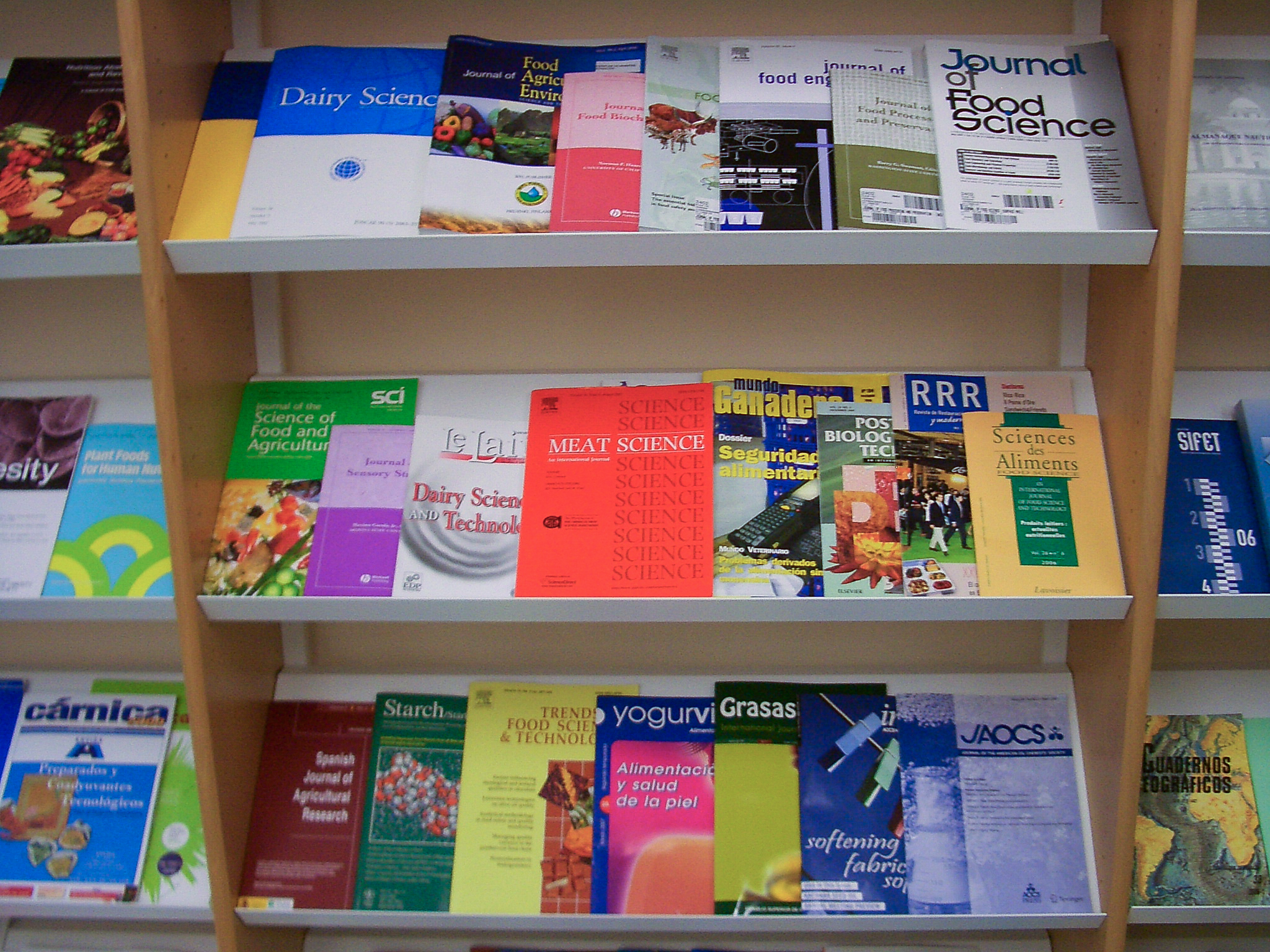
Image courtesy of Vmenkov on Wikimedia Commons